
Color-Changing Tattoos for Blood Glucose Monitoring
[vc_row row_section_id_description=” row_padding_bottom=’20’ row_type_width_description=” row_padding_right=’300′ row_padding_left=’300′ row_margin_top=’0′ row_margin_bottom=’0′][vc_column][md_text md_text_alignment=”left” md_text_title_line_height=”40″ md_text_desc_line_height=”40″ md_text_title_bottom_space=”20″ md_text_separator_bottom_space=”10″ md_text_description_bottom_space=”20″ md_text_title_separator=”no” md_text_separator_width=”110″ md_text_separator_height=”5″ md_text_separator_color=”rgb(0, 255, 153)” md_text_style=”solid” md_text_solid_color=”rgba(20,20,20,1)” md_text_gradient_color=”pixflow_base64eyJjb2xvcjEiOiIjODcwMmZmIiwiY29sb3IyIjoiIzA2ZmY2ZSIsImNvbG9yMVBvcyI6IjAuMDAiLCJjb2xvcjJQb3MiOiIxMDAuMDAiLCJhbmdsZSI6MH0=” md_text_title_size=”32″ md_text_letter_space=”0″ md_text_hover_letter_space=”0″ md_text_easing=”cubic-bezier(0.215, 0.61, 0.355, 1)” md_text_use_title_custom_font=”no” md_text_title_google_fonts=”font_family:Roboto%3Aregular%2C100%2C100italic%2C300%2C300italic%2Citalic%2C500%2C500italic%2C700%2C700italic%2C900%2C900italic|font_style:300%20light%20regular%3A300%3Anormal” md_text_number=”1″ md_text_title1=”pixflow_base64″ md_text_title2=”Typography Shortcode” md_text_title3=”Typography Shortcode” md_text_title4=”Typography Shortcode” md_text_title5=”Typography Shortcode” md_text_content_size=”14″ md_text_content_color=”rgba(20,20,20,1)” md_text_use_desc_custom_font=”no” md_text_desc_google_fonts=”font_family:Roboto%3Aregular%2C100%2C100italic%2C300%2C300italic%2Citalic%2C500%2C500italic%2C700%2C700italic%2C900%2C900italic|font_style:400%20regular%3A400%3Anormal” md_text_use_button=”no” md_text_button_style=”fade-oval” md_text_button_size=”standard” left_right_padding=”0″ md_text_button_text=”READ MORE” md_text_button_icon_class=”icon-angle-right” md_text_button_color=”rgba(0,0,0,1)” md_text_button_text_color=”rgba(255,255,255,1)” md_text_button_bg_hover_color=”rgb(0,0,0)” md_text_button_hover_color=”rgb(255,255,255)” md_text_button_url=”#” md_text_button_target=”_self” md_text_animation_type=”fade” md_text_animation_speed=”200″ md_text_animation_delay=”0″ md_text_animation_position=”center” md_text_animation_show=”once” md_text_animation_easing=”Quart.easeInOut” md_text_parallax_speed=”1″]
Constant pricking may soon be a thing of the past for diabetics.
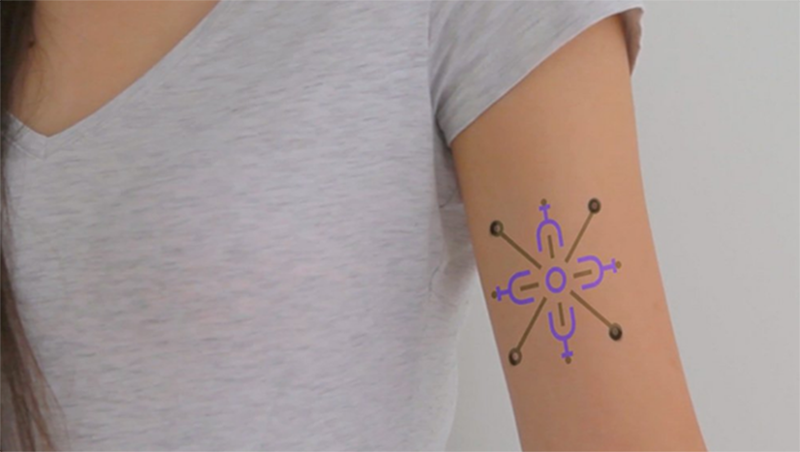
Researchers from Harvard and MIT have joined forces to create Dermal Abyss, a proof-of-concept that turns the skin into an interactive display. While it is yet to be furthered for clinical trials, the project has gained traction and has expanded the possibilities for the future of glucose monitoring.
“Currently… diabetics need to monitor their glucose levels by piercing the skin, 3 to 10 times per day. With Dermal Abyss, we imagine the future where the painful procedure is replaced with a tattoo,” states the researchers behind the Dermal Abyss website.
[/md_text][md_text md_text_alignment=”left” md_text_title_line_height=”40″ md_text_desc_line_height=”40″ md_text_title_bottom_space=”20″ md_text_separator_bottom_space=”10″ md_text_description_bottom_space=”20″ md_text_title_separator=”no” md_text_separator_width=”110″ md_text_separator_height=”5″ md_text_separator_color=”rgb(0, 255, 153)” md_text_style=”solid” md_text_solid_color=”rgba(20,20,20,1)” md_text_gradient_color=”pixflow_base64eyJjb2xvcjEiOiIjODcwMmZmIiwiY29sb3IyIjoiIzA2ZmY2ZSIsImNvbG9yMVBvcyI6IjAuMDAiLCJjb2xvcjJQb3MiOiIxMDAuMDAiLCJhbmdsZSI6MH0=” md_text_title_size=”32″ md_text_letter_space=”0″ md_text_hover_letter_space=”0″ md_text_easing=”cubic-bezier(0.215, 0.61, 0.355, 1)” md_text_use_title_custom_font=”no” md_text_title_google_fonts=”font_family:Roboto%3Aregular%2C100%2C100italic%2C300%2C300italic%2Citalic%2C500%2C500italic%2C700%2C700italic%2C900%2C900italic|font_style:300%20light%20regular%3A300%3Anormal” md_text_number=”1″ md_text_title1=”pixflow_base64PGgzPjxzdHJvbmc+SG93IEl0IFdvcmtzPC9zdHJvbmc+PC9oMz4=” md_text_title2=”Typography Shortcode” md_text_title3=”Typography Shortcode” md_text_title4=”Typography Shortcode” md_text_title5=”Typography Shortcode” md_text_content_size=”14″ md_text_content_color=”rgba(20,20,20,1)” md_text_use_desc_custom_font=”no” md_text_desc_google_fonts=”font_family:Roboto%3Aregular%2C100%2C100italic%2C300%2C300italic%2Citalic%2C500%2C500italic%2C700%2C700italic%2C900%2C900italic|font_style:400%20regular%3A400%3Anormal” md_text_use_button=”no” md_text_button_style=”fade-oval” md_text_button_size=”standard” left_right_padding=”0″ md_text_button_text=”READ MORE” md_text_button_icon_class=”icon-angle-right” md_text_button_color=”rgba(0,0,0,1)” md_text_button_text_color=”rgba(255,255,255,1)” md_text_button_bg_hover_color=”rgb(0,0,0)” md_text_button_hover_color=”rgb(255,255,255)” md_text_button_url=”#” md_text_button_target=”_self” md_text_animation_type=”fade” md_text_animation_speed=”200″ md_text_animation_delay=”0″ md_text_animation_position=”center” md_text_animation_show=”once” md_text_animation_easing=”Quart.easeInOut” md_text_parallax_speed=”1″]
The science behind the experiment replaces traditional tattoo inks with biosensors. These would then react to the alterations in interstitial fluid with color changes. The tattoos also serve as sensors for levels of pH, glucose, and sodium.
[/md_text][/vc_column][/vc_row][vc_row row_padding_top=’0′ row_section_id_description=” row_padding_bottom=’20’ row_type_width_description=” row_padding_right=’300′ row_padding_left=’300′ row_margin_top=’0′ row_margin_bottom=’0′][vc_column css=”.vc_custom_1497916726660{padding-left: 300px !important;}”][vc_raw_html]JTNDaWZyYW1lJTIwc3JjJTNEJTIyaHR0cHMlM0ElMkYlMkZwbGF5ZXIudmltZW8uY29tJTJGdmlkZW8lMkYyMTYyMDMwMjglMjIlMjB3aWR0aCUzRCUyMjY0MCUyMiUyMGhlaWdodCUzRCUyMjM2MCUyMiUyMGZyYW1lYm9yZGVyJTNEJTIyMCUyMiUyMHdlYmtpdGFsbG93ZnVsbHNjcmVlbiUyMG1vemFsbG93ZnVsbHNjcmVlbiUyMGFsbG93ZnVsbHNjcmVlbiUzRSUzQyUyRmlmcmFtZSUzRSUwQSUzQ3AlM0UlM0NhJTIwaHJlZiUzRCUyMmh0dHBzJTNBJTJGJTJGdmltZW8uY29tJTJGMjE2MjAzMDI4JTIyJTNFRGVybWFsQWJ5c3MlM0ElMjBQb3NzaWJpbGl0aWVzJTIwb2YlMjBCaW9zZW5zb3JzJTIwYXMlMjBhJTIwVGF0dG9vZWQlMjBJbnRlcmZhY2UlM0MlMkZhJTNFJTIwZnJvbSUyMCUzQ2ElMjBocmVmJTNEJTIyaHR0cHMlM0ElMkYlMkZ2aW1lby5jb20lMkZmbHVpZGludGVyZmFjZXMlMjIlM0VGbHVpZCUyMEludGVyZmFjZXMlM0MlMkZhJTNFJTIwb24lMjAlM0NhJTIwaHJlZiUzRCUyMmh0dHBzJTNBJTJGJTJGdmltZW8uY29tJTIyJTNFVmltZW8lM0MlMkZhJTNFLiUzQyUyRnAlM0U=[/vc_raw_html][/vc_column][/vc_row][vc_row row_padding_top=’0′ row_section_id_description=” row_type_width_description=” row_padding_right=’300′ row_padding_left=’300′ row_margin_top=’0′ row_margin_bottom=’0′][vc_column][md_text md_text_alignment=”left” md_text_title_line_height=”40″ md_text_desc_line_height=”40″ md_text_title_bottom_space=”20″ md_text_separator_bottom_space=”10″ md_text_description_bottom_space=”20″ md_text_title_separator=”no” md_text_separator_width=”110″ md_text_separator_height=”5″ md_text_separator_color=”rgb(0, 255, 153)” md_text_style=”solid” md_text_solid_color=”rgba(20,20,20,1)” md_text_gradient_color=”pixflow_base64eyJjb2xvcjEiOiIjODcwMmZmIiwiY29sb3IyIjoiIzA2ZmY2ZSIsImNvbG9yMVBvcyI6IjAuMDAiLCJjb2xvcjJQb3MiOiIxMDAuMDAiLCJhbmdsZSI6MH0=” md_text_title_size=”32″ md_text_letter_space=”0″ md_text_hover_letter_space=”0″ md_text_easing=”cubic-bezier(0.215, 0.61, 0.355, 1)” md_text_use_title_custom_font=”no” md_text_title_google_fonts=”font_family:Roboto%3Aregular%2C100%2C100italic%2C300%2C300italic%2Citalic%2C500%2C500italic%2C700%2C700italic%2C900%2C900italic|font_style:300%20light%20regular%3A300%3Anormal” md_text_number=”1″ md_text_title1=”pixflow_base64PGgzPjxzdHJvbmc+Q3VycmVudCBMaW1pdGF0aW9uczwvc3Ryb25nPjwvaDM+” md_text_title2=”Typography Shortcode” md_text_title3=”Typography Shortcode” md_text_title4=”Typography Shortcode” md_text_title5=”Typography Shortcode” md_text_content_size=”14″ md_text_content_color=”rgba(20,20,20,1)” md_text_use_desc_custom_font=”no” md_text_desc_google_fonts=”font_family:Roboto%3Aregular%2C100%2C100italic%2C300%2C300italic%2Citalic%2C500%2C500italic%2C700%2C700italic%2C900%2C900italic|font_style:400%20regular%3A400%3Anormal” md_text_use_button=”no” md_text_button_style=”fade-oval” md_text_button_size=”standard” left_right_padding=”0″ md_text_button_text=”READ MORE” md_text_button_icon_class=”icon-angle-right” md_text_button_color=”rgba(0,0,0,1)” md_text_button_text_color=”rgba(255,255,255,1)” md_text_button_bg_hover_color=”rgb(0,0,0)” md_text_button_hover_color=”rgb(255,255,255)” md_text_button_url=”#” md_text_button_target=”_self” md_text_animation_type=”fade” md_text_animation_speed=”200″ md_text_animation_delay=”0″ md_text_animation_position=”center” md_text_animation_show=”once” md_text_animation_easing=”Quart.easeInOut” md_text_parallax_speed=”1″]
In their present state, these color-changing tattoos are far from being ready for mass usage. Color range and intensity could be adjusted for more apparent readings. Additional research may also be needed to ensure the longevity and consistency of the tattoos.
[/md_text][md_text md_text_alignment=”left” md_text_title_line_height=”40″ md_text_desc_line_height=”40″ md_text_title_bottom_space=”20″ md_text_separator_bottom_space=”10″ md_text_description_bottom_space=”20″ md_text_title_separator=”no” md_text_separator_width=”110″ md_text_separator_height=”5″ md_text_separator_color=”rgb(0, 255, 153)” md_text_style=”solid” md_text_solid_color=”rgba(20,20,20,1)” md_text_gradient_color=”pixflow_base64eyJjb2xvcjEiOiIjODcwMmZmIiwiY29sb3IyIjoiIzA2ZmY2ZSIsImNvbG9yMVBvcyI6IjAuMDAiLCJjb2xvcjJQb3MiOiIxMDAuMDAiLCJhbmdsZSI6MH0=” md_text_title_size=”32″ md_text_letter_space=”0″ md_text_hover_letter_space=”0″ md_text_easing=”cubic-bezier(0.215, 0.61, 0.355, 1)” md_text_use_title_custom_font=”no” md_text_title_google_fonts=”font_family:Roboto%3Aregular%2C100%2C100italic%2C300%2C300italic%2Citalic%2C500%2C500italic%2C700%2C700italic%2C900%2C900italic|font_style:300%20light%20regular%3A300%3Anormal” md_text_number=”1″ md_text_title1=”pixflow_base64PGgzPjxzdHJvbmc+UmlzZSBvZiBUYXR0b28gSW5ub3ZhdGlvbnM8L3N0cm9uZz48L2gzPg==” md_text_title2=”Typography Shortcode” md_text_title3=”Typography Shortcode” md_text_title4=”Typography Shortcode” md_text_title5=”Typography Shortcode” md_text_content_size=”14″ md_text_content_color=”rgba(20,20,20,1)” md_text_use_desc_custom_font=”no” md_text_desc_google_fonts=”font_family:Roboto%3Aregular%2C100%2C100italic%2C300%2C300italic%2Citalic%2C500%2C500italic%2C700%2C700italic%2C900%2C900italic|font_style:400%20regular%3A400%3Anormal” md_text_use_button=”no” md_text_button_style=”fade-oval” md_text_button_size=”standard” left_right_padding=”0″ md_text_button_text=”READ MORE” md_text_button_icon_class=”icon-angle-right” md_text_button_color=”rgba(0,0,0,1)” md_text_button_text_color=”rgba(255,255,255,1)” md_text_button_bg_hover_color=”rgb(0,0,0)” md_text_button_hover_color=”rgb(255,255,255)” md_text_button_url=”#” md_text_button_target=”_self” md_text_animation_type=”fade” md_text_animation_speed=”200″ md_text_animation_delay=”0″ md_text_animation_position=”center” md_text_animation_show=”once” md_text_animation_easing=”Quart.easeInOut” md_text_parallax_speed=”1″]
This is not the first time tattoos became the center of biotechnology experiments. Last year, MIT introduced DuoSkin. Users can sync this high-tech wearable to their phones, letting them start and stop Spotify playlists, increase or decrease volume or brightness, and even control laptop mouses.
Couple Harmony, another tattoo innovation, is a device that can act as a modified mood ring. Using tiny heating elements beneath thermochromic materials, the tattoos can change colors depending on its user’s current emotions.
[/md_text][vc_empty_space height=”75″][/vc_empty_space][md_text md_text_alignment=”left” md_text_title_line_height=”40″ md_text_desc_line_height=”40″ md_text_title_bottom_space=”20″ md_text_separator_bottom_space=”10″ md_text_description_bottom_space=”20″ md_text_title_separator=”no” md_text_separator_width=”110″ md_text_separator_height=”5″ md_text_separator_color=”rgb(0, 255, 153)” md_text_style=”solid” md_text_solid_color=”rgba(20,20,20,1)” md_text_gradient_color=”pixflow_base64eyJjb2xvcjEiOiIjODcwMmZmIiwiY29sb3IyIjoiIzA2ZmY2ZSIsImNvbG9yMVBvcyI6IjAuMDAiLCJjb2xvcjJQb3MiOiIxMDAuMDAiLCJhbmdsZSI6MH0=” md_text_title_size=”32″ md_text_letter_space=”0″ md_text_hover_letter_space=”0″ md_text_easing=”cubic-bezier(0.215, 0.61, 0.355, 1)” md_text_use_title_custom_font=”no” md_text_title_google_fonts=”font_family:Roboto%3Aregular%2C100%2C100italic%2C300%2C300italic%2Citalic%2C500%2C500italic%2C700%2C700italic%2C900%2C900italic|font_style:300%20light%20regular%3A300%3Anormal” md_text_number=”1″ md_text_title1=”pixflow_base64″ md_text_title2=”Typography Shortcode” md_text_title3=”Typography Shortcode” md_text_title4=”Typography Shortcode” md_text_title5=”Typography Shortcode” md_text_content_size=”14″ md_text_content_color=”rgba(20,20,20,1)” md_text_use_desc_custom_font=”yes” md_text_desc_google_fonts=”font_family:Roboto%3Aregular%2C100%2C100italic%2C300%2C300italic%2Citalic%2C500%2C500italic%2C700%2C700italic%2C900%2C900italic|font_style:400%20regular%3A400%3Anormal” md_text_use_button=”no” md_text_button_style=”fade-oval” md_text_button_size=”standard” left_right_padding=”0″ md_text_button_text=”READ MORE” md_text_button_icon_class=”icon-angle-right” md_text_button_color=”rgba(0,0,0,1)” md_text_button_text_color=”rgba(255,255,255,1)” md_text_button_bg_hover_color=”rgb(0,0,0)” md_text_button_hover_color=”rgb(255,255,255)” md_text_button_url=”#” md_text_button_target=”_self” md_text_animation_type=”fade” md_text_animation_speed=”200″ md_text_animation_delay=”0.0″ md_text_animation_position=”center” md_text_animation_show=”once” md_text_animation_easing=”Quart.easeInOut” md_text_parallax_speed=”1″ align=”left”]
https://www.geek.com/tech/mits-color-changing-tattoos-are-perfect-for-diabetics-1702668/
https://www.bustle.com/p/this-tattoo-changes-colors-depending-on-your-blood-sugar-levels-64752
[/md_text][/vc_column][/vc_row]